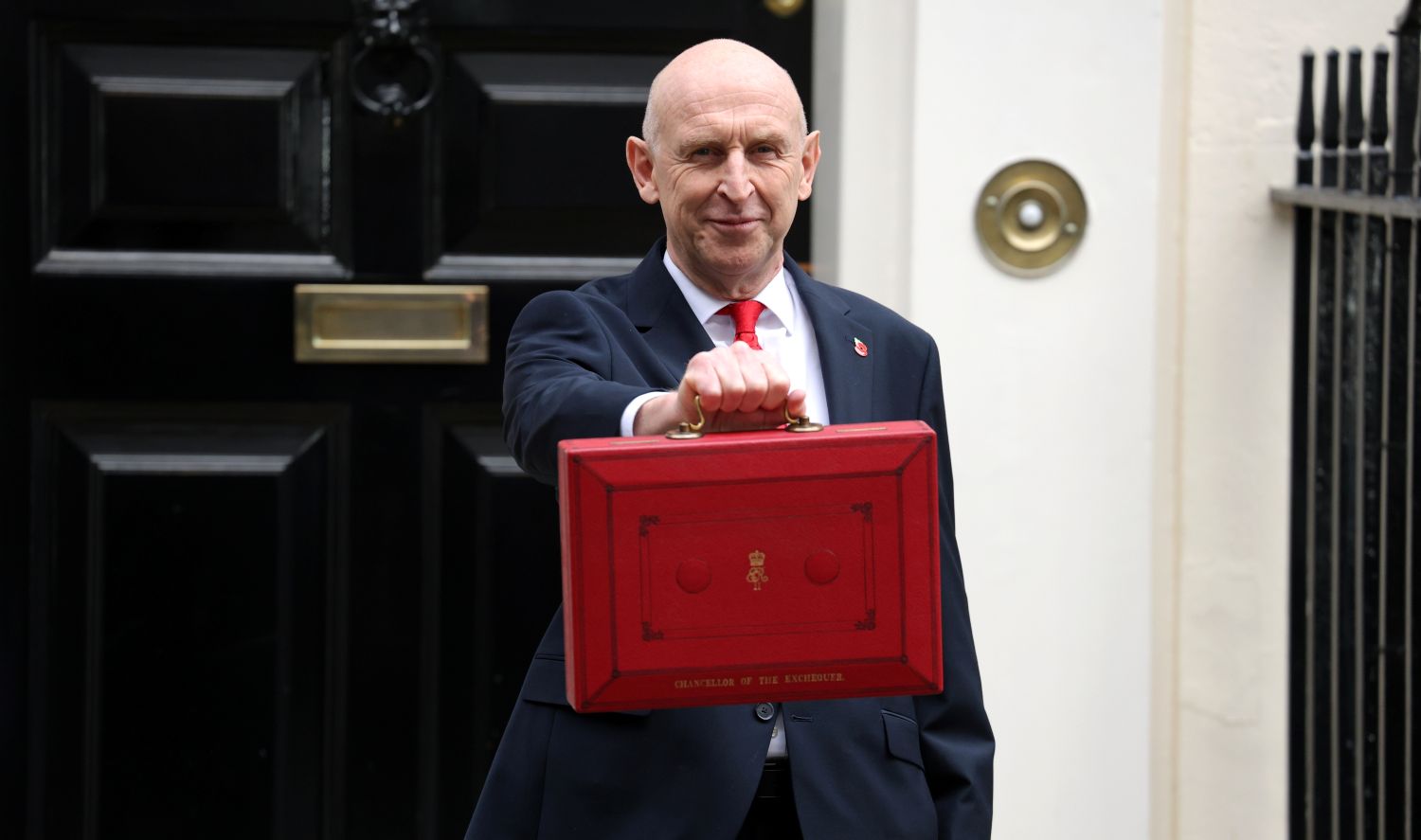
Autumn Budget 2026 Review: What John Healey’s First Budget Means for Your Business
There were no headline tax rises in John Healey’s first Budget. Income tax, National Insurance, VAT and corporation tax rates all stay where they are.
But that isn’t the whole story. Beneath the headlines sit smaller changes that land squarely on owner-managed businesses: a halved relief for owners planning a sale, slower tax relief on equipment and higher rates on property and savings income. Most take effect in April 2027, so there’s a window to plan, but not a long one.
In this article, we look at what was announced, what it means for your business and what to do about it now.
The Budget at a glance
This was the first Budget since Andy Burnham became Prime Minister, and the Chancellor described it as ‘for the working people of Britain. It’s a Budget for business, big and small’.
The backdrop is tough. The Office for Budget Responsibility cut its 2027 growth forecast from 1.6% to 1.0% and raised its inflation forecast to 3.4%, largely because of energy costs. With little room to manoeuvre, the Chancellor turned plenty of small dials rather than pulling big levers.
The Treasury’s own summary leads on cost-of-living support. Households in council tax bands A to D get a £100 energy payment, while the electricity VAT cut and the 5p fuel duty cut both run until July 2027. The household energy support is funded by a temporary rise in the tax banks pay on their profits. For businesses, the detail is where it matters.
Planning to sell? The BADR change you can’t ignore
For owners with an exit on the horizon, this is the biggest change in the Budget. The lifetime limit for Business Asset Disposal Relief will halve from £1 million to £500,000 for disposals from 6th April 2027. The 18% rate on qualifying gains stays the same, but gains above the new limit will generally be taxed at the main rate of 24%.
On a £1 million qualifying gain:
- Sell before 6th April 2027: £1 million at 18% = £180,000
- Sell on or after 6th April 2027: £500,000 at 18% plus £500,000 at 24% = £210,000
That’s £30,000 more tax on the same sale. The Chancellor says three in four claimants won’t be affected, but those who are tend to own established, valuable businesses.
Special rules apply to contracts entered into before 6th April 2027 that haven’t completed, so if a sale is in progress, take advice on timing.
Will Founders’ Relief fill the gap?
The Budget also introduces a new Founders’ Relief from April 2027: a 10% capital gains tax rate on up to £10 million of lifetime gains. It sounds generous, but the conditions are tight.
Based on what’s been published so far, founders will need to have held at least 25% of the company from the start, owned it for five years and been UK resident throughout. The company will need at least £10 million of turnover and 15 qualifying full-time employees, and must pass growth or innovation tests still under consultation. For most owner-managed businesses, BADR will remain the relief that counts.
Investing in equipment? Timing just got more important
Full expensing stays, so companies can still write off qualifying new plant and machinery in the year they buy it. The changes sit around it:
- The main rate first-year allowance rises from 40% to 50% for qualifying spending from 1st January 2027.
- The main writing-down allowance falls from 14% to 12% from April 2027.
The writing-down cut applies to existing pool balances too, so assets you’ve already bought will be relieved more slowly. It delays relief rather than removing it, which in effect means paying tax a little earlier. If you have significant capital spending planned, it’s worth modelling the timing before you commit.
What it means for your payroll
From 1st April 2027, the National Living Wage rises by 3.9% to £13.21 an hour. The rate for 18- to 20-year-olds rises to £11.27, and the rate for 16- and 17-year-olds and apprentices to £8.31. Employer National Insurance is unchanged.
Remember the knock-on effects too: overtime, pension contributions and pay differentials all move when the floor does.
There’s better news for staff who drive for work. The 55p tax-free mileage rate for the first 10,000 miles is being made permanent, and the rate above 10,000 miles rises from 25p to 35p.
The government also plans to legislate so non-compete clauses no longer stand in the way of hiring at startups and scaling firms. Details will follow in 2027, but if your senior contracts lean on restrictive covenants, it’s one to watch.
Paying yourself as an owner-director
Dividend tax rates are unchanged. Tax on property and savings income, however, rises by two percentage points from April 2027, to 24% at the basic rate, 44% at the higher rate and 49% at the additional rate. If you hold property personally or have large savings outside an ISA, your personal tax position deserves a fresh look.
Further out, the rules on company distributions will be modernised from April 2028 to stop complex arrangements being used to extract profits at lower rates. And from April 2029, Self Assessment payments on account are set to become smaller and more regular.
Rates, energy and the cost of borrowing
Business rates relief was aimed at the high street. From April 2027, the small business rate relief threshold rises from £12,000 to £18,000, but only for retail, hospitality and leisure properties in England. Energy support is similarly narrow, with up to 25% off electricity bills for more than 10,000 energy-intensive businesses.
Two other changes are worth noting:
- The surcharge banks pay on their profits rises from 3% to 6% for 15 months from 1st January 2027, and could feed through to the cost of lending.
- The 5p fuel duty cut ends on 1st July 2027, when rates also rise with RPI inflation.
What has business made of it?
Reaction has been measured. Shevaun Haviland, director general of the British Chambers of Commerce, said: ‘This was a “steady as you go” budget, sending the right signals to business, but lacking big calls that would really shift the economic dial.’
The Institute for Fiscal Studies was more pointed. Its director, Helen Miller, said: ‘This Budget has a raft of fiddly measures but very little that will move the dial on growth.’
So what should you do now?
With most changes landing in April 2027, you have around five months to act:
- Review your exit timeline. If a sale is possible soon, check the BADR impact before 6th April 2027.
- Phase your capital spending. Model whether planned purchases sit better before or after the 2027 changes.
- Re-budget your payroll. Build the April wage rises and their knock-on costs into your forecasts.
- Review how you take income. Property and savings income will cost more from April 2027, so revisit the mix.
- Check your finance facilities. If you rely on bank borrowing, watch your pricing as the surcharge takes effect.
Get ahead of the changes with WCL
This wasn’t a Budget of big shocks. When we looked ahead to the Budget in September, the question was what might change. Now the detail is out, and most of it comes with a fixed date, so the job is to act on it. Knowing how it affects your numbers now is far more useful than finding out at year-end.
If you’d like help working out what the Budget means for your business, please get in touch. WCL provides outsourced finance director support and accountancy services for businesses and individuals. We’d love to hear from you.